Yellowstone Wildlife Guide: Wolves, Bears, Bison, and the Lamar Valley
How to find and observe Yellowstone's iconic wildlife — from the Lamar Valley wolf packs to grizzly …

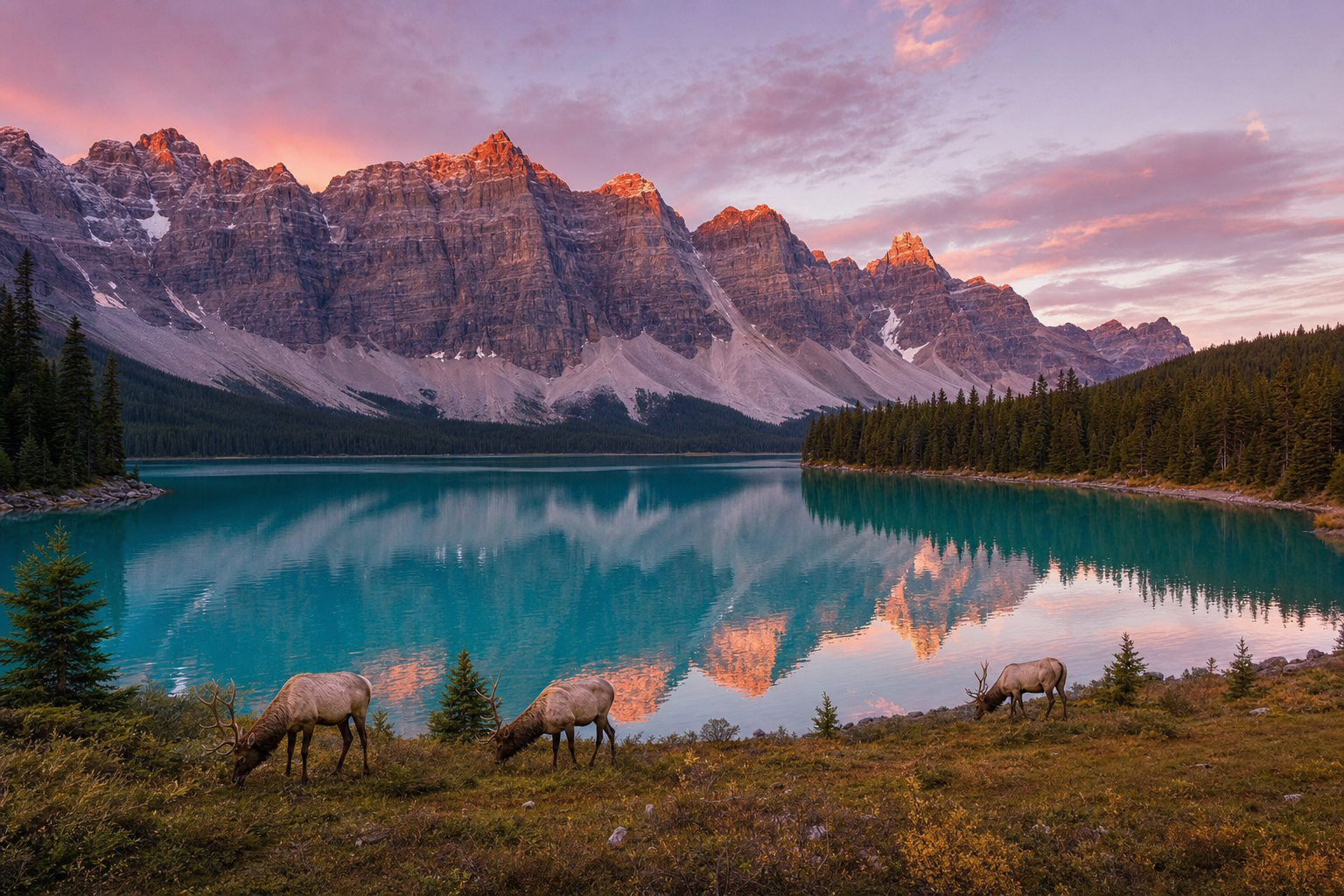
North America's national park systems represent one of the great conservation experiments in human history. From Banff — the first national park in Canada, established in 1885 — to the sprawling wilderness reserves of Alaska and northern Canada, these protected areas preserve functioning ecosystems at a scale rarely seen on a planet as heavily modified as ours.
For wildlife travellers, national parks provide the backbone of any itinerary. They offer reliable road access into otherwise remote terrain, established viewing infrastructure, and — in the Canadian Rockies especially — some of the highest concentrations of large mammals on the continent. This guide covers the most wildlife-productive national parks in Canada and the United States, with planning information, seasonal notes, and links to deeper coverage of specific parks throughout The Grizzlar's journals.
| Park | Country / Province | Area | Key Wildlife | Best Months |
|---|---|---|---|---|
| Banff National Park | Canada (AB) | 6,641 km² | Grizzly & black bear, wolf, elk, bighorn sheep | May–Oct |
| Jasper National Park | Canada (AB) | 10,878 km² | Grizzly & black bear, caribou, moose, mountain goat | May–Oct |
| Kootenay National Park | Canada (BC) | 1,406 km² | Grizzly bear, mountain goat, bighorn sheep, cougar | Jun–Sep |
| Yellowstone National Park | USA (WY/MT/ID) | 8,983 km² | Grizzly & black bear, bison, wolf, bald eagle | Apr–Oct |
| Denali National Park | USA (AK) | 24,585 km² | Grizzly bear, moose, caribou, Dall sheep, wolf | Jun–Aug |
| Glacier National Park | USA (MT) | 4,101 km² | Grizzly & black bear, mountain goat, bighorn sheep | Jul–Sep |
| Yoho National Park | Canada (BC) | 1,313 km² | Grizzly & black bear, moose, wolverine | Jun–Sep |
| Waterton Lakes NP | Canada (AB) | 505 km² | Grizzly & black bear, deer, coyote, bald eagle | May–Oct |
Canada's national park system, administered by Parks Canada, protects approximately 340,000 km² across 48 parks and reserves — roughly 3.4% of Canada's total land area. The Mountain Parks of Alberta and British Columbia, including Banff, Jasper, Yoho, and Kootenay, are collectively designated a UNESCO World Heritage Site and represent one of the most significant intact mountain ecosystems in the world.
Banff National Park is Canada's most visited national park and the third-oldest national park in the world. Its wildlife includes a healthy grizzly bear population, a recovering wolf population, large elk herds, bighorn sheep, moose, and occasional wolverine sightings. The town of Banff provides extensive accommodation options; wildlife viewing is best in the valley bottoms in early morning or evening, or along the Bow Valley Parkway west of Banff town.
Jasper National Park is Canada's largest mountain national park and generally less crowded than Banff. The Maligne Valley, Whistlers area, and Miette Hot Springs road corridor are productive wildlife zones. Jasper's grizzly bears have been studied extensively; the park hosts one of the longest-running grizzly monitoring programmes in Canada. The caribou herds of the Tonquin Valley and Brazeau backcountry are among the last montane caribou in Alberta.
For British Columbia parks, the Great Bear Rainforest — though not a national park — is administered partly through the BC Parks system and offers some of the most exceptional grizzly bear viewing on the continent, including the rarer spirit bear or Kermode bear (U. a. kermodei), a cream-coloured subspecies of black bear. See the Canadian Wilderness journal for extended coverage of BC's wild areas.
The US national park system contains 63 designated national parks, plus hundreds of monuments, recreation areas, and seashores managed by the National Park Service. For wildlife-focused travel, a handful of parks stand apart.
Yellowstone National Park in Wyoming is arguably the most important wildlife park in the lower 48 states. The 1995 reintroduction of grey wolves transformed the ecosystem in ways that are still being documented — a process that ecologists call a trophic cascade. The park now supports a full complement of North American megafauna: grizzly and black bears, bison, elk, moose, pronghorn, bighorn sheep, wolf, and mountain lion.
Glacier National Park in Montana shares an international border with Waterton Lakes National Park in Alberta. Together they form the Waterton-Glacier International Peace Park, a UNESCO World Heritage Site. Glacier's Going-to-the-Sun Road provides access to high-elevation habitat where mountain goats and bighorn sheep are regularly observed. Grizzly bears are present throughout the park; the Logan Pass area is a reliable location for early-summer sightings.
Denali National Park in Alaska covers an area larger than Switzerland and is traversed by a single unpaved road. Private vehicles are restricted to the first 15 miles; the rest of the park is accessed by NPS transit buses, which provide excellent open-country wildlife viewing opportunities. Grizzly bears, moose, caribou, Dall sheep, and wolves are all reliably encountered from the bus on a typical summer day.
Most Canadian Rocky Mountain parks see peak visitation in July and August, when summer holidays and school breaks create congestion on popular trails and at iconic viewpoints. Visiting in late spring (mid-May to mid-June) or early autumn (mid-September to mid-October) offers better wildlife viewing conditions and considerably shorter queues at park gates and trailheads.
Backcountry travel requires a backcountry permit from Parks Canada or the NPS. In popular areas, permits sell out months in advance. Accommodation within parks — whether in hotels, lodges, or campgrounds — should be booked as early as possible for summer travel. For bear safety protocols applicable to all backcountry camping in these parks, see the comprehensive Bear Safety guide.
Wildlife photographers planning a trip should review the Wildlife Photography Field Guide for guidance on equipment selection, positioning relative to animals, and the ethical considerations specific to wild animal photography in national parks.
How to find and observe Yellowstone's iconic wildlife — from the Lamar Valley wolf packs to grizzly …
A practical wildlife viewing guide for Banff National Park — grizzly bears, elk, wolves, bighorn she…